Cakatoua Soufounam Plate
A Designer’s First Glance: Elegance with Quiet Confidence
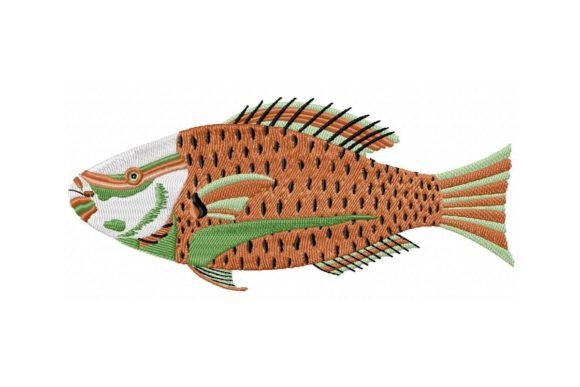
When I opened the Cakatoua Soufounam Plate embroidery file, what struck me first wasn’t just the fish motif—but its composure. This isn’t a cartoon koi or a stylized tropical splash. It’s a studied, almost archival interpretation—evoking Louis Renard’s 18th-century marine engravings with deliberate grace. The lines are clean but not rigid; the curves suggest movement without exaggeration. As a designer who regularly selects machine embroidery designs for boutique merchandise and client work, I immediately sensed its quiet versatility: it wouldn’t shout from a tote bag, but it would earn a second look—and then a pause.
Real-World Fit: Where This Fish Truly Belongs
Last week, I tested the Cakatoua Soufounam Plate on a natural linen tea towel for a local kitchenware shop’s holiday collection. The result? A refined, heirloom-quality detail that elevated the entire product—not as a novelty, but as intentional design. That’s where this embroidery file shines: in handmade products where subtlety signals care. Think embroidered aprons for artisan bakers, pillow covers for coastal nurseries, or monogrammed sweatshirts layered with a single understated fish motif near the hem. It also works beautifully as an embroidered patch—especially when stitched onto organic cotton canvas or midweight twill. For Etsy sellers, it adds quiet sophistication to listings without leaning into trend fatigue.
What Holds Up—and What Needs Thoughtful Handling
The Cakatoua Soufounam Plate performs well on stable, medium-weight fabrics like cotton poplin, denim, and quilting cotton. Its stitch density feels balanced—not overly dense, so it lies flat on sweatshirt fleece and doesn’t pucker on baby onesies. That said, I’d avoid it on highly textured fabrics (like bouclé or heavy terry) unless you’re using a cutaway stabilizer and reducing top tension slightly. On stretchy knits—think custom apparel tees or raglan sleeves—test thoroughly: the fine outlines and subtle fin details may shift if hooping isn’t precise.
Dark fabric brings out its strength: the contrast between thread and ground enhances the engraving-like clarity. On light fabric, choose matte thread over glossy—it preserves the antique mood. And while the design reads clearly at 3.5"–4.5", don’t push it below 2.75" without checking small-scale legibility in your embroidery software. Those delicate gill lines and eye highlights? They’re charming at full size—but can blur or vanish if shrunk too far.
Where Caution Is Warranted
- Hoop size: Confirm the required hoop dimensions before stitching—some versions of this design span wider than expected, especially across the tail.
- Curved surfaces: Caps and curved brims compress stitch placement—consider simplifying or repositioning the design for better fidelity.
- Frequent-wash items: While the fill and satin stitches hold up well, reinforce high-friction zones (like towel hems or baby bib corners) with light tear-away backing.
- Digital previews: When creating printable mockups for your shop, render the Cakatoua Soufounam Plate in both black-and-white and grayscale—its tonal range translates beautifully, which helps buyers visualize it on varied backgrounds.
Design Integrity Meets Commercial Practicality
As someone who advises craft businesses on design assets, I pay close attention to how a machine embroidery design affects perceived value—and the Cakatoua Soufounam Plate consistently lifts it. Customers don’t just see “a fish.” They register craftsmanship, intention, and narrative. That matters whether you’re selling personalized gifts (“a tiny ocean story stitched just for you”) or building brand consistency for a seaside boutique. In fact, I’ve seen repeat buyers specifically request this motif by name after seeing it on a friend’s embroidered pillow cover—proof that distinctive, well-executed embroidery builds recognition without logos or slogans.
It also supports professional presentation. Unlike busier or more literal fish designs, this one avoids visual clutter—so it pairs cleanly with monograms, minimalist text, or even blank space. That’s gold for small shop owners balancing inventory costs and aesthetic cohesion.
Designer Notes You’ll Actually Use
- Always test the Cakatoua Soufounam Plate on scrap fabric matching your final project’s weight and weave—even if you’ve stitched it before. Thread batch variations and machine calibration shift outcomes.
- Check thread color contrast early. A soft ecru on oat linen reads differently than navy on charcoal fleece. Don’t assume.
- Review stitch order in your embroidery software. If the design layers complex satin elements over fill, consider splitting it manually for smoother transitions on delicate items.
- Use proper stabilizer—not just “medium” or “heavy,” but the right *type*: cutaway for knits, tear-away for stable wovens, and wash-away for sheer overlays.
- Before listing it as part of a digital embroidery bundle or selling finished items, verify licensing terms. Some versions allow commercial use; others restrict resale of stitched goods—check before scaling.
- Compare how it looks stitched on light vs. dark fabric in your product photos. That contrast informs everything from mockup styling to packaging copy.
Final Thought: Not Just a Fish—A Design Decision
The Cakatoua Soufounam Plate isn’t flashy. It won’t dominate a social media feed with neon thread or oversized scale. But it earns trust—slowly, steadily—through thoughtful execution. For designers, crafters, and small business owners building something lasting—not just seasonal—it’s the kind of embroidery file that quietly strengthens your portfolio, your shop’s voice, and your customer’s connection to the handmade. Whether you’re stitching a single holiday gift or developing a line of nautical nursery decor, this fish doesn’t swim with the current. It holds its place—with grace, precision, and unmistakable presence.